

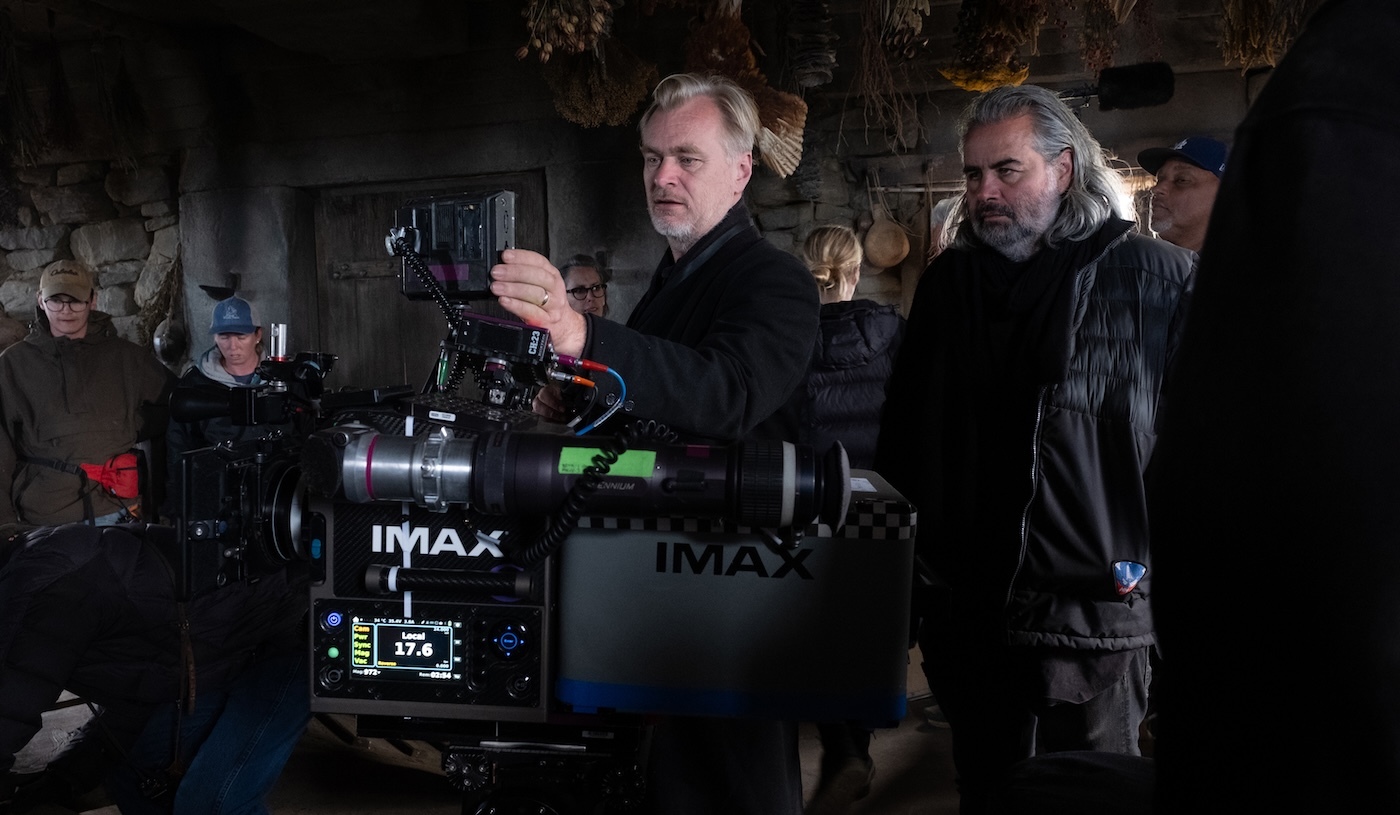
“Tell me about a complicated man.”
Those are the first words of Emily Wilson’s translation of The Odyssey, lauded for its strikingly inventive interpretation of a thousand-year-old text—so much so, in fact, that in eight years it’s already become the definitive edition of Homer’s epic. You’ve got a copy, I have one sitting at home; and Barnes & Noble even puts them out in stacks by the front door so desperate college kids can catch up on reading before their final exams.
By some strange coincidence, according to his numerous recent interviews, one Christopher Nolan also happened to chance upon a Wilson translation of the poem and was immediately taken aback by its opening line (reproduced above). Ironically, Wilson herself has since been distinctly unenthusiastic about Nolan’s much-hyped adaptation, a reminder that discovering a brilliant translation is rather easier than convincing its translator you’ve understood it. This is a line that amazed and divided scholars equally upon publication, owing to how famously difficult it is to pin down in English, and how the new interpretation radically reimagined Homer’s first statement.
The Greek opening of The Odyssey is “Andra moi ennepe, Mousa, polutropon,” literally meaning “Tell me, Muse, about the man of many turns”; or at least something to that effect, because the component tropos means “turn, way, manner, or direction.” Wilson, however, cuts out all reference to physical movement entirely, opting for the more liberal “complicated” instead. And in her version of the tale, that’s a remarkably economical word for the whole problem of Odysseus, of whom the poem repeatedly asks: Who really is this man? Which version of him are we seeing? Is he telling the truth? Is he acting out of necessity, vanity, love, or cunning? All or none of the above?
Odysseus’ difficult journey has long been the focus of translators’ first lines, but Wilson’s opening eschews that narrative, declaring that the central subject of the poem is a difficult human being: someone who has twists and turns within himself, who alternates between deception and sincerity, and who is generous, cruel, tender, and arrogant at the same time. Isn’t that such a creative thematic statement to start off the epic? Nolan thought so too, citing Emily Wilson’s Odyssey as a driving force behind his adaptation—and then promptly crafted a film so devoid of Odysseus’ essence that they shouldn’t even share the same name.
Yes, Christopher Nolan’s The Odyssey, at first glance, bears more than a passing resemblance to the text. All the boxes are checked off: the right characters go to the right places in the right order, they encounter the same magical and horrifying creatures as in the poem, and then (spoiler) the titular hero comes back to take his revenge on the suitors pulling apart his household. But aside from the surface-level arrangements, does this film really capture what’s at the heart of Homer’s original? Matt Damon’s Odysseus isn’t shown to be all that tricky, or, for that matter, “complicated”: he’s a total jerk, sure, but even that arrogant side of him gets toned down in favor of a brooding, silent leader who spends more time thinking than using his famed silver tongue.
So why, then, would a film make the conscious choice to turn one of the most distinctive characters in literary history into a shell of himself? My answer again has to do with Emily Wilson: in both versions, Odysseus is a complicated man, but they aren’t the same type of complicated—and more than that, these two works aren’t even telling the same story. How is that possible? Well, Wilson’s translation uses “complicated” to encapsulate what we already know about our main figure: he’s reckless and mean-spirited, but he also stays loyal and compassionate throughout. Nolan, meanwhile, paints Odysseus as a different person entirely, with totally different motives. He’s not exactly his slippery and sly self, as he normally is, but instead someone who is deeply tormented by how he caused the downfall of Troy by inventing the Trojan Horse so that he and his soldiers could sneak in and kill everyone. It’s hard to be a smiling trickster when you’re traumatized after destroying an entire civilization, as Nolan rightly assumes.
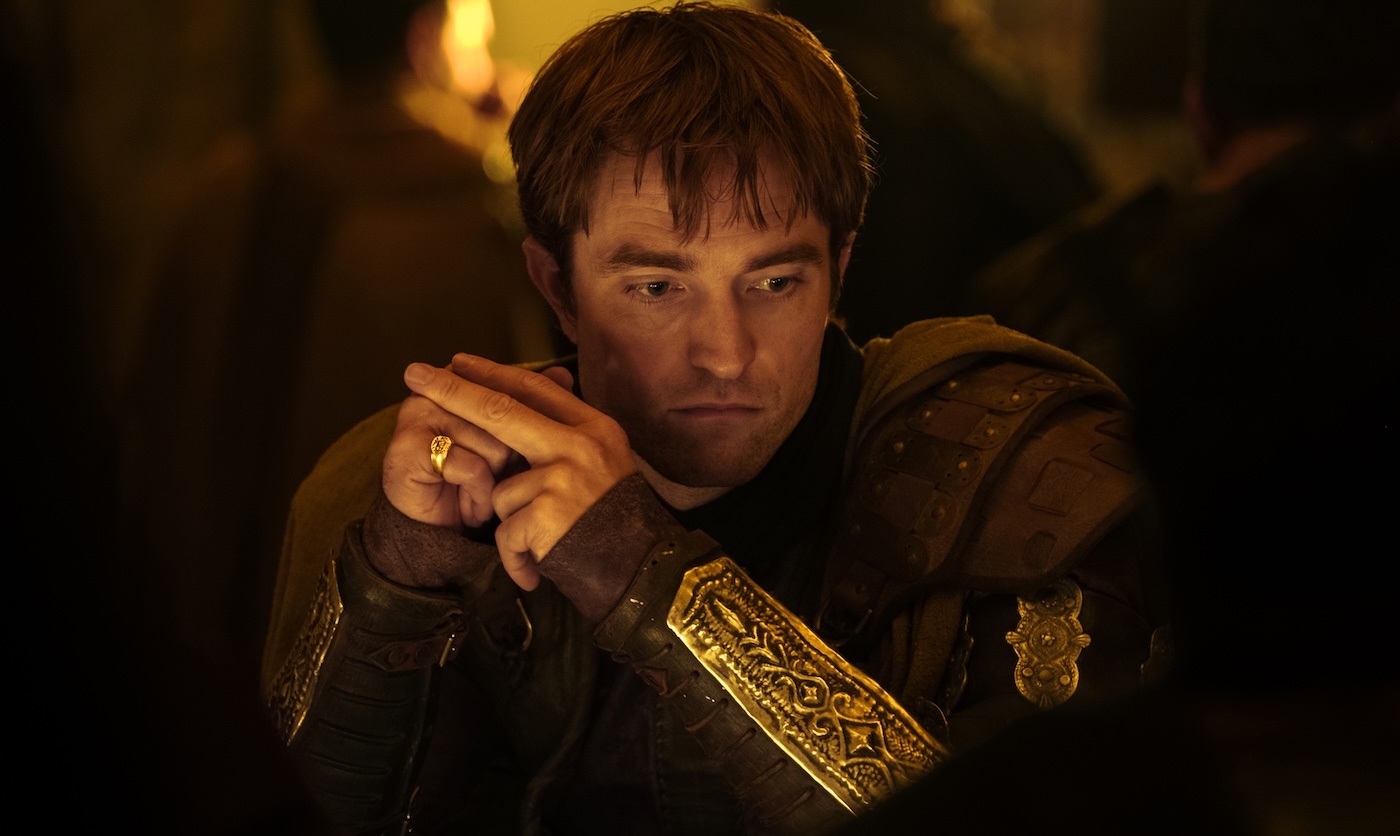
Oppenheimer 2—I mean, The Odyssey—and its reconstructed narrative pose a few logistical problems for the film, seeing as Homer’s original work isn’t about guilt at all. In order to contort his movie into this new and awkward position, Nolan straight-out invents two prominent storylines: Antinous’ backstory and the Law of Zeus. As far as I know, the suitor and primary antagonist Antinous never switched places with a child so that he could escape fighting in the Trojan War, but in the film, this flashback scene appears at least three times, conveying how Odysseus’ underhanded tactics have given rise to villains who feel justified in acting dishonorably. Zeus’ Law, which is essentially the Golden Rule, also doesn’t feature prominently in the epic poem, but Nolan hammers in its message to an embarrassing degree—Odysseus, as a military leader, is responsible for the wave of invaders who defy Zeus’ command for hospitality, and now he must atone through years of suffering on his way back home.
Let’s put aside the scholarly quibbles for now, however—The Odyssey is also just not a very well-made film. Lines like Robert Pattinson’s much-memed “Somebody get these beggars out of here!” clash with attempts at meditative elegy (“The breaking of Zeus’ law, spreading like plague. Our age of bronze is collapsing; and maybe he couldn’t bear to see the ruins of what he’d done”). There’s no charisma to be found anywhere except in Pattinson as Antinous, and even he puts on a rare lackluster performance as he struggles to spit out his long and clunky dialogue. The film really grows in excitement as it goes on, but what struck me as I was watching was that it felt almost unlike a Christopher Nolan picture—the first third was full of uninteresting exposition instead of action; the lighting seemed overly bright and artificial, especially on Tom Holland’s Telemachus; the director’s patented non-linear storytelling was relegated to a background role; and nothing blew me away visually like the sand explosions in Dunkirk or the bursts of light and color throughout Oppenheimer.
Above everything else, that might be the strangest thing about Nolan’s The Odyssey: it isn’t exactly bad because it betrays Homer, but it also simply refuses to replace him with anything as compelling. It strips away the poem’s central fascination with identity, disguise, storytelling, and performance, then fills the vacuum with a fairly conventional meditation on the horrors of war—all while expecting us to jump up and down with joy as Odysseus slaughters man after man in his murderous revenge against the suitors (I did; this last hour was by far the most exhilarating section of the movie, and maybe of Nolan’s filmography in total).
So this brings us back to Emily Wilson’s first line. “Tell me about a complicated man” is, more than anything, a promise. It tells us that The Odyssey will be interested less in where Odysseus travels than in who he is: in every lie, disguise, boast, and homecoming, he asks us to reconsider him from another angle. The hero keeps changing shape because the poem purposely shifts so that we can’t settle on a single interpretation of him. Nolan clearly understood the importance of that opening sentence—he’s said as much himself—but he somehow arrived at the opposite conclusion, where Odysseus isn’t complicated because he contains contradictions but because he feels bad. This is a fundamental misunderstanding of everything that makes The Odyssey great: one interpretation of the character creates one of literature’s richest protagonists, while the other makes for an all-too-familiar Christopher Nolan hero.
The new film is in our hands now. It will win many Oscars, almost certainly be lauded as one of the movies of the year, and will break countless box office records while maintaining its 4.4 rating on Letterboxd. The praise isn’t entirely unwarranted. Cinema is, after all, a social spectacle, and Nolan has unquestionably succeeded in capturing the hearts of readers and viewers while making the line between literature and film ever so slightly blurrier. But while watching The Odyssey, remember that this tale is about the traveler more than the thrills of the itinerary. Smoke, fire, and storm abound in Christopher Nolan’s retelling of the classic—but behind it all, there must still lie the faint beating heart of the complicated man.
Film Stills courtesy of https://www.motionpictures.org/2026/05/gods-monsters-heroes-imax-universal-unveils-epic-new-images-from-christopher-nolans-the-odyssey/