

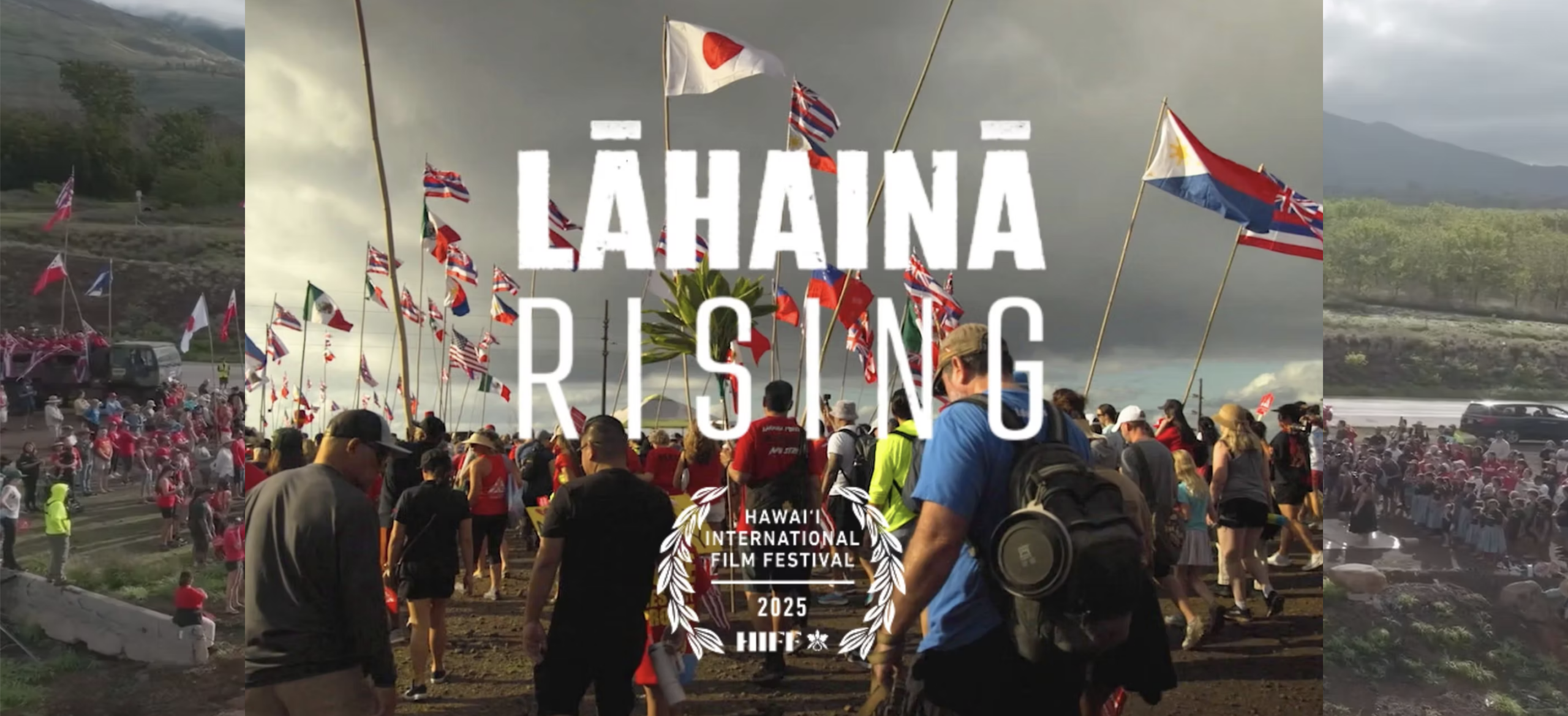
Through heart-wrenching interviews and first-person footage, LĀHAINĀ RISING delivers an earnest account of the tragic wildfires that broke out on August 8th, 2023. When state, federal, and military entities failed to provide necessary disaster relief, residents from across Hawaiʻi gathered in Lāhainā to distribute essential resources. Thoughtfully crafted and brimming with emotion, LĀHAINĀ RISING captures the profound compassion and generosity that blossomed in the aftermath of this horrific tragedy. Delving into the cultural, societal, and economic factors surrounding the wildfires, this film demonstrates the severity of extractive environmental practices while highlighting the immense power of sustainable food sovereignty and community organizing. At its heart, LĀHAINĀ RISING functions as a reminder that true healing does not emerge in isolation, but through collective care, mutual responsibility, and community support.
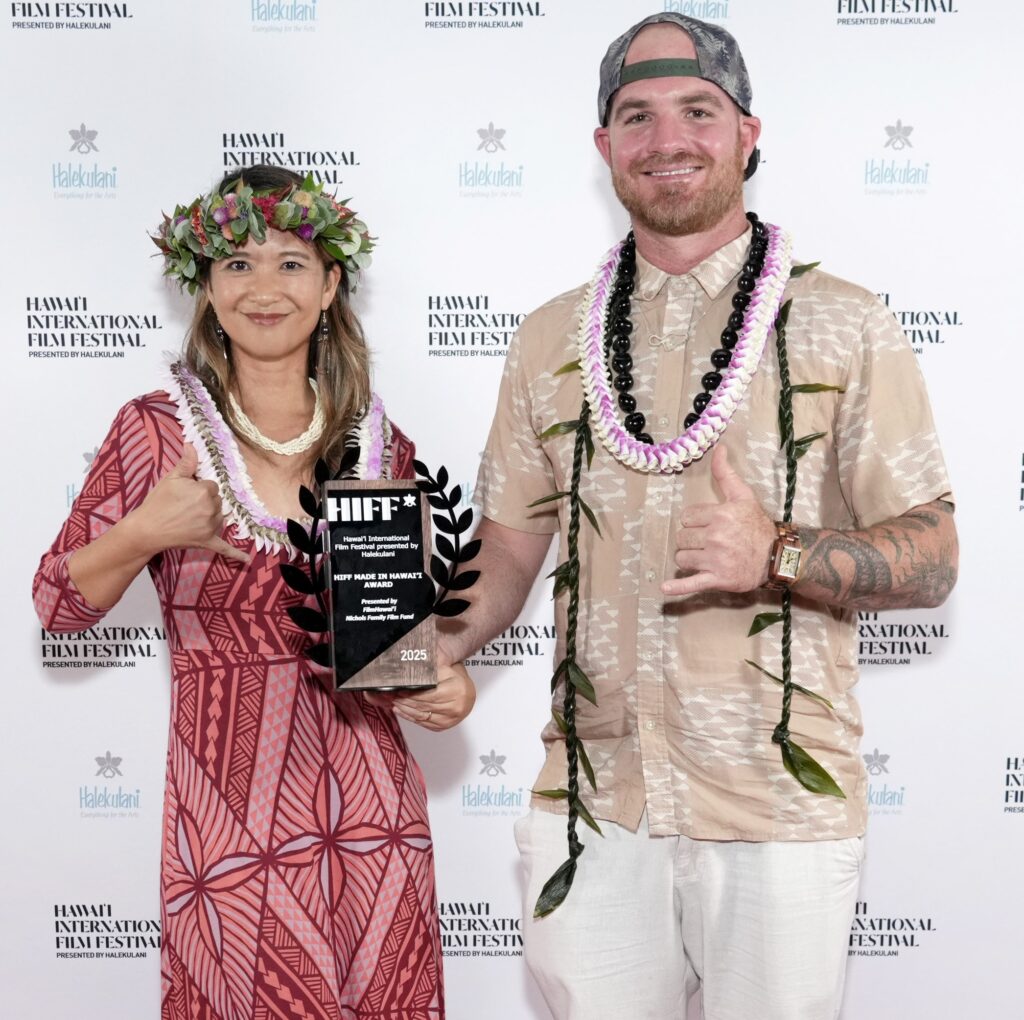
Shortly after their premiere at the HIFF45 (the film would co-win the Best Made In Hawai‘i Feature Award), I had the privilege of speaking to LĀHAINĀ RISING Director Matty Schweitzer and Producer De Andre Makakoa. In the wake of the fires, news outlets from across the world converged on Maui to cover the story. While Lāhainā residents like Matty and De Andre worked tirelessly to deliver essential resources, reporters stood among the ashes, offering fragmented, incomplete accounts of the disaster. Most media coverage portrayed the Lāhainā fires as a sudden, unpredictable, and isolated event. This narrative framed the loss of over one hundred lives as an unavoidable tragedy, rather than the result of systemic environmental exploitation requiring accountability and corrective measures. After FEMA arrived and recovery efforts were fully underway, the creative team set off to create a film that would bolster the voices of their community and capture the true story of Lāhainā.
LĀHAINĀ RISING uses two timelines to guide viewers through the complex series of events surrounding the fires. Interviews with residents and first-person recordings document August 8th in real time, while archival footage and historical anecdotes provide additional context behind the diversion of Lāhainā’s natural resources. This multi-layered approach transforms a complex and intricate story into one coherent narrative. In doing so, LĀHAINĀ RISING exposes the systemic failures that catalyzed, exacerbated, and prolonged the wildfires. This thoughtful and detailed editing approach helps viewers contextualize residents’ frustrations and heartache. Harrowing accounts of the day become even more devastating as audiences discover that decades of profit-driven negligence enabled the vast destruction and immense casualties.
The cinematography in LĀHAINĀ RISING is perfectly imperfect. Cell phone recordings and bodycam videos from the fires are blurry, disorienting, and at times inaudible. Therein lies their impact. Rather than trying to over-edit the material, Matty and his team chose to preserve the authenticity of residents’ experiences. Scenes of scorched neighborhoods and blurred remains show viewers a small fraction of the horrors that transpired that day. Though reluctant to do so, both Matty and De Andre described the editing process as traumatic. Their hesitation to use such a loaded word only underscored the emotional toll exacted by hours spent watching gruesome footage. As a result of their labors, this documentary offers an accurate portrayal of survivors’ fear, panic, and loss.
As the film progresses, videos captured in the months following the fires become more polished and artfully composed. This evolution reflects the filmmakers’ transition from community organizers to documentarians. Only when their presence on the frontlines was no longer required did they fully step behind the camera. Throughout the film, raw footage of the fires is juxtaposed with serene landscapes showcasing Lāhainā’s natural beauty. This transition provides viewers with moments of emotional reprieve while heightening the tension and fear residents experienced during evacuation. Together, these visual modes underscore the devastation of the fires while reflecting residents’ hope for the future of Lāhainā.
Through my conversations with Matty and De Andre, I came to understand that the beauty of LĀHAINĀ RISING lies in the filmmakers’ genuine love for their community. As someone with family members who lost everything in the fires, I am deeply grateful to the production team for shouldering the immense responsibility of documenting this tragedy. This film is far from easy to watch, and I can only imagine how challenging it must have been to create. A remarkable display of strength and resilience, LĀHAINĀ RISING transforms grief into action, channeling heartache into a project that inspires hope for the people of Lāhainā. This documentary embodies the spirit of mālama ʻāina while paying tribute to the residents who have and continue to fight for the restoration of Maui’s natural resources. For those invested in the past, present, and future of Hawaiʻi, LĀHAINĀ RISING is a must-watch.
The HIFF ONLINE CREATIVES & CRITICS IMMERSIVE (HOCCI) program supports sustainable film criticism in Hawai’i through mentorship and paid career opportunities for Hawai’i-based AANHPI critics. The mission of HOCCI is to broaden diversity in film criticism across the Pacific and use influencer branding strategies to spark career opportunities. The 2025 HOCCI is supported by Critical Minded, a grant-making and learning initiative that supports cultural critics of color in the United States.
 Lena Mealaʻaloha Stevens-Ng is an Afro-Indigenous, Native Hawaiian born and raised on Oʻahu. After graduating from Vassar College with a double-major in media studies and film, she began working full-time as a marketing coordinator and has traveled the continent expanding her professional skills. As an aspiring filmmaker with an affinity for experimental documentaries, she recently began working as a production assistant in hopes of one day creating short films that explore the vast perspectives and nuances of Indigenous life.