

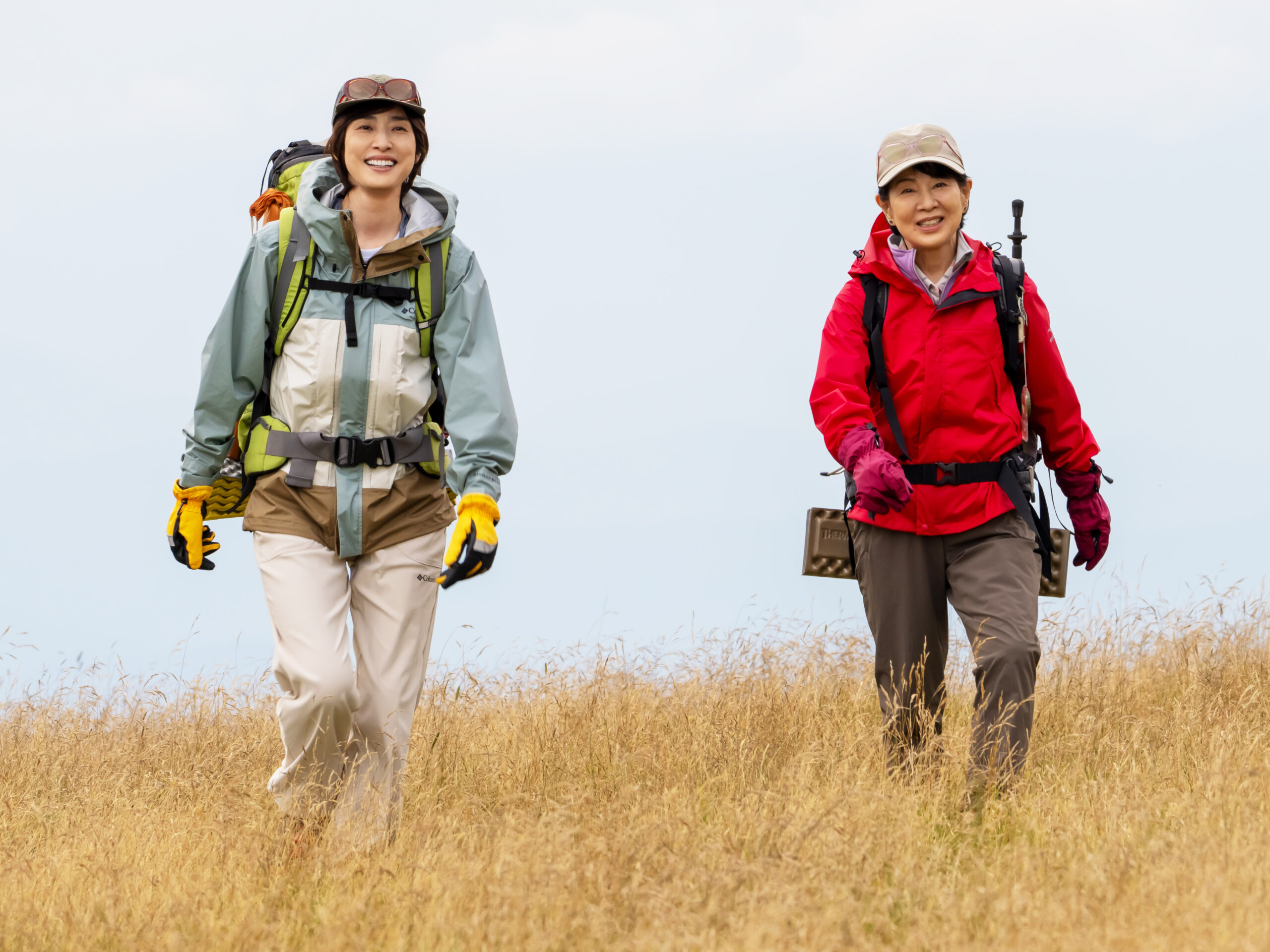
CLIMBING FOR LIFE premiered at the 45th Hawai’i International Film Festival presented by Halekulani.
CLIMBING FOR LIFE is a stunning Japanese film that dives into the life of Junko Tabei: the first woman to summit Mt. Everest. Directed by Junji Sakamoto, the film is based on the autobiography, Life with its Ups and Downs, written by Junko Tabei. Using a nonlinear storyline that follows the course of her life, we experience Tabei’s trials as she faces the challenges of leading an all-women mountaineering group to Everest, along with the benefits and consequences of becoming a public figure, balancing her passion and family life, and her battle with cancer. Junko Tabei (Sayuri Yoshinaga) was an incredible woman who spent her life pursuing her passion for mountaineering and giving back to the community. The film explores the misogynistic challenges women face entering a male-dominated field, and the isolating struggles of regret, aging, and reflection.
The beautiful backdrop of the vast mountains and trails creates a sense of peace and longing. Principal production was filmed in many diverse locations across Japan, adding to the awe of the film. Even as she battles cancer, Tabei continues to hike as much as she can, rekindling connections with her friend, husband, and son. Using her platform as an international icon, she encourages others to hike and build their own relationship with the land. After her cancer diagnosis, she creates a program that allows students affected by Fukushima to hike Mt. Fuji every year. She uses hiking to bring together the community, and in doing so strengthens her relationship with her son. Mountaineering is the core her world surrounds.
Throughout the film, Tabei’s success and ambition is her source of conflict. Members of her all-women mountaineering group envy and resent her for being the one to summit, instead of accomplishing their achievement together. Tabei reflects on her leadership abilities throughout her life, feeling guilty that she alone reached the top and gained recognition for it. She uses her platform to benefit her family and inspire her community, but her husband and son struggle to be happy for her. Her son despises her for her accomplishments, feeling like he is constantly compared to and abandoned by her. The film demonstrates how personal success interrupts relationships and can only be resolved internally. Throughout her life, Tabei longs to amend her relationships, but realizes it takes two to look inward and accept the past. We see this with Junko’s husband, Masaaki Tabei (Kôichi Satô). Not until he lets go of his inner resentment can he fully love and support Junko. The film holds many lessons that can only be learned with time and experience. The audience is able to immerse themselves as every character reflects and grows from their past feelings and mistakes. The power of communication and community helps everyone broaden their perspective and release inner tension.
Since we follow along different stages through Junko’s life, her emotional journey feels very anticlimactic. While there is some conflict in the film, it is formed from years of resentment which slowly unfold, instead of a specific goal or event. Her goal is to do what she loves, which is hiking with her loved ones. Tabei’s life is intriguing because she is a world-renowned, extraordinary mountaineer, but she is also an ordinary woman navigating internal and external challenges. She is strong and inspiring, but audiences can resonate with her doubts and trials of despair. As she comes to terms with the past, her aging is reflected beautifully, containing a raw vulnerability of her regret and loneliness while she is faced with the impending end of her life and legacy. While there are overarching themes of gender discrimination, leadership, and community, the film focuses on her personal struggles, allowing the audience to connect more deeply. CLIMBING FOR LIFE is a touching biopic surrounding the lessons to be learned from Junko Tabei.
The HIFF ONLINE CREATIVES & CRITICS IMMERSIVE (HOCCI) program supports sustainable film criticism in Hawai’i through mentorship and paid career opportunities for Hawai’i-based AANHPI critics. The mission of HOCCI is to broaden diversity in film criticism across the Pacific and use influencer branding strategies to spark career opportunities. The 2025 HOCCI is supported by Critical Minded, a grant-making and learning initiative that supports cultural critics of color in the United States.

Kylee Maxwell is a senior at the University of Hawai’i at Mānoa pursuing her BFA in Digital Cinema. Kylee has worked as a cinematographer on several short films in addition to working as a videographer on an independent TV pilot and feature film with Orig Entertainment. With aspirations to pursue a career as a director of photography, she aims to showcase the different facets of humanity through the lens. She is passionate about pushing the boundaries of film, often by creating stories exploring social and environmental issues. Her goal is to uplift marginalized voices through her past, present, and future projects. Kylee wishes to make a meaningful impact in the community and inspire others through her films.