

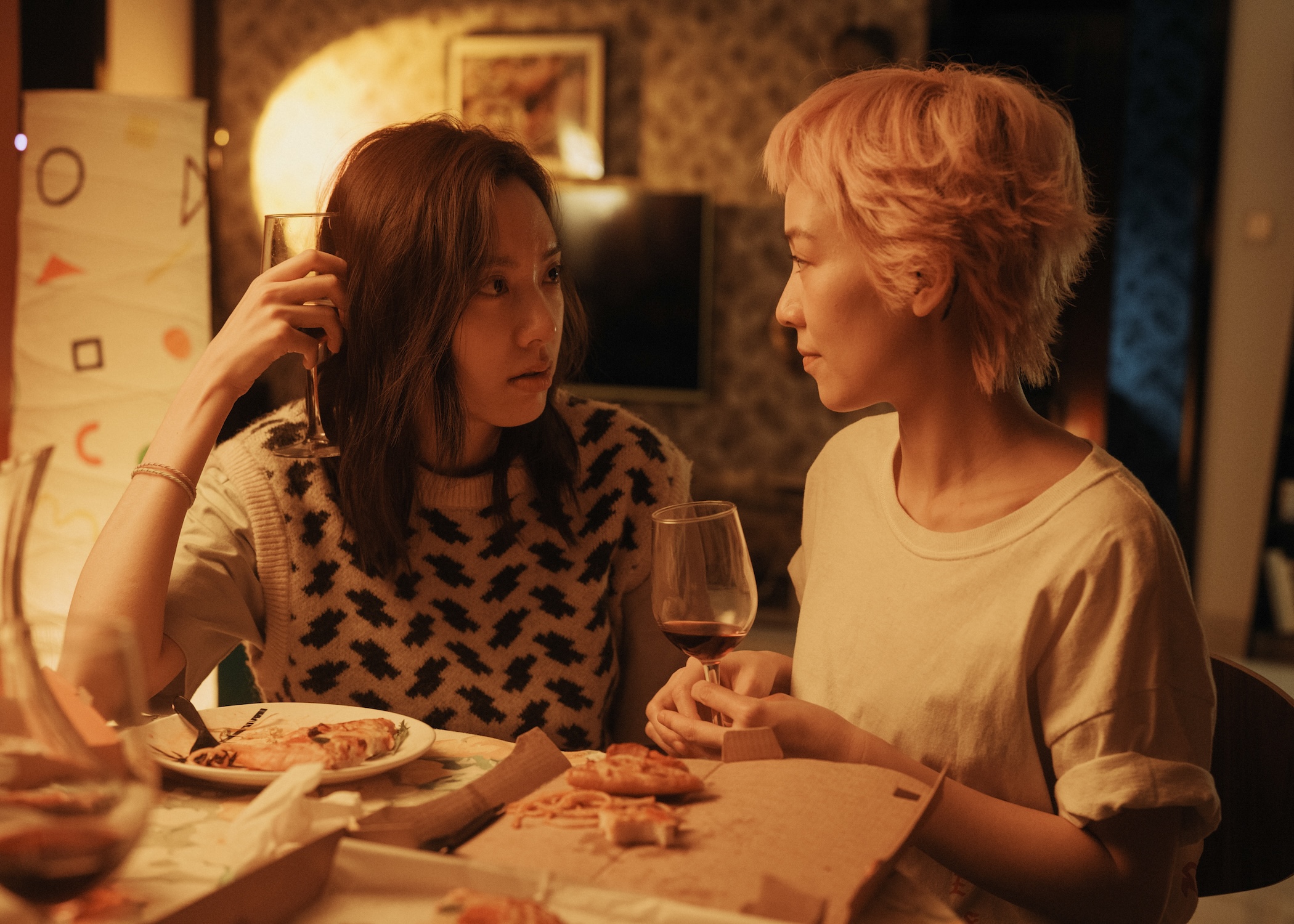
A Review of BIG LITTLE THINGS (2026), Directed by Michelle Zhou
The original Chinese title of BIG LITTLE THINGS (2026) is “謊言生活,” which translates into English as “A Life of Lies.” As the title suggests, Xiao Lei (Cuishan Liang) lives among lies. She tells her parents that she lives with her friend Li Bei (Jialing Sun), but Bei is, in fact, her lover. During the New Year holiday, she brings her client Chen Yao (Bin Yu) home and introduces him as her boyfriend. As Bei watches Lei add one lie to another, she begins to wonder whether their love is real. Yet the life built from these growing lies holds more than the truths Lei has hidden. It is also surrounded by pressure disguised as kindness, desire hidden beneath generosity, and loneliness mistaken for love.
There are many forms of lying in the film beyond Lei’s own lies. Here, a lie can mean more than simply saying something that is not true. It can also describe a gap between the attitude someone shows and the meaning beneath it.
This gap reveals itself most violently when Lei visits a fruit shop. In a cramped, dim space enclosed by plastic sheeting, the woman who runs the shop tells Lei that, at her age, she should be married and have children. The woman sees this as the natural way to live in their society. She speaks as though she is offering kindness. Yet her kindness leaves no room for the individual life of the person listening. Her brief words become more than a suggestion. They become a kind of command, and a cruel judgment of anyone who does not live that way. What appears to be kindness reaches Lei as violence. With no consideration given to who she is, Lei is struck by these words as though by a fist. She leaves the shop and stands there in a daze.
Bei experiences a similar situation. While preparing an exhibition, she meets a middle-aged man at a restaurant who is helping her with it. He suggests that the meeting is not meant to put any pressure on her. Yet he offers her alcohol and comments on her appearance. Sensing the lecherous desire hidden beneath his kindness, she grows uncomfortable. She cannot hide that feeling from the camera. To make her discomfort even clearer, the camera looks down beneath the table and captures her feet in their socks, drawn inward among the men’s legs. Despite his assurance that she should feel no pressure, the image shows how much pressure the situation places on her.
Yao’s lie carries more complicated nuances. He agrees to Lei’s request with an air of indifference and even visits her family home, pretending to be her boyfriend. Yet at one point, he can no longer hide his desire to place a hand on her shoulder. What remains unclear is whether this gesture comes from genuine love for Lei or from his own loneliness and sense of something missing. The warmth of a family and the comfort of a stable home, which he had not enjoyed before, may have eased his loneliness. Perhaps that is why he reaches out to her. The two eventually sleep together, but Lei knows that it was a momentary impulse rather than genuine love. The very next day, she tells him to leave.
There are many ways to capture, through cinema, the lies that exist between words, attitudes, and feelings. This film makes extensive use of the ARRI ALEXA Mini and handheld camerawork. The relatively small, mobile camera and this way of filming are well suited to catching lies as they briefly reveal themselves in the cramped spaces of everyday life. In this sense, the camera follows the “lies” (謊言) woven into the “life” (生活) of the original title.
Free from a fixed position on a tripod, the camera captures the characters’ words and gestures in the cramped fruit shop, the Japanese restaurant, and Lei’s home. The final scene, too, focuses less on the wider view inside the train than on the small space occupied by a character nestled between a seat and a window. Following the character’s gaze within that space, the camera captures the cold lies that seep into everyday life in a bewildering world.
크고 작은 거짓말로 이루어진 삶
영화 <BIG LITTLE THINGS>(2026)의 중국어 원제는 ‘謊言生活’으로, 영어로 옮기면 ‘A Life of Lies’다. 제목처럼 주인공 샤오 레이(Xiao Lei, Cuishan Liang)는 거짓말 속에서 살아간다. 부모에게는 친구 리 베이(Li Bei, Jialing Sun)와 함께 살고 있다고 말하지만, 사실 베이는 그녀의 애인이다. 새해 명절에는 자신의 고객인 천 야오(Chen Yao, Bin Yu)를 데려가 남자친구라고 소개한다. 베이는 거짓에 거짓을 더하는 레이를 보며, 자신들의 사랑은 진짜인지 의문을 품는다. 거짓말이 불어나 만들어낸 이 삶에는 레이가 감춘 진실만 있는 것이 아니다. 선의의 얼굴을 한 강요와 호의 속에 숨은 욕망, 사랑으로 착각한 외로움 또한 그 삶을 둘러싸고 있다.
영화 속에는 레이의 거짓말 외에도 다양한 형태의 거짓말이 존재한다. 여기서 거짓말은 단순히 사실과 다른 것을 말하는 행위를 넘어, 겉으로 드러나는 태도와 그 안에 담긴 의미가 어긋나는 것으로도 확장해 생각할 수 있다.
이러한 어긋남이 가장 폭력적으로 드러나는 장면은 레이가 과일 가게에 들렀을 때다. 비닐로 둘러싸인 좁고 흐릿한 공간에서, 과일 가게 주인 아주머니는 레이에게 그 나이면 결혼하고 아이를 가져야 한다고 말한다. 아주머니는 이 사회에서 그렇게 살아가는 것이 당연하다고 여기기에, 마치 선의를 베풀듯 말을 건넨다. 하지만 그 선의에는 정작 말을 듣는 사람의 개별적인 삶에 대한 고려가 없다. 그렇기에 그 짧은 말은 제안이 아니라 일종의 명령이자, 그러한 삶을 살지 않는 사람에 대한 잔혹한 평가가 된다. 선의의 모습을 한 말이 레이에게는 폭력으로 다가오는 것이다. 자신의 정체성을 고려받지 못한 채 말의 주먹에 얻어맞은 레이는 가게를 나와 멍하니 서 있다.
베이 역시 이와 비슷한 상황을 경험한다. 전시를 준비 중인 그녀는 식당에서 전시를 도와주는 중년 남성을 만난다. 그는 부담을 주려는 자리가 아니라는 식으로 말하면서도, 그녀에게 술을 건네고 외모에 관해 이야기한다. 그 호의 속에 숨겨진 음흉한 욕망을 감지한 그녀는 불편함을 느낀다. 그녀는 카메라 앞에서 그 감정을 숨기지 못한다. 카메라는 그녀의 불편함을 더욱 선명하게 드러내기 위해 식탁 아래를 내려다보며, 남자들의 다리 사이에서 움츠러든 그녀의 발과 양말을 포착한다. 부담을 주지 않겠다는 말과 달리, 그 자리가 그녀에게 어떤 압박을 주고 있는지 보여주는 것이다.
야오의 거짓말에는 조금 더 복잡한 뉘앙스가 담겨 있다. 그는 무심한 듯 레이의 부탁을 들어주고 남자친구를 가장해 그녀의 집까지 찾아간다. 하지만 어느 순간, 레이의 어깨에 손을 올리고 싶은 자신의 욕망을 숨기지 못한다. 문제는 그 손길이 진정으로 레이를 사랑해서 나온 것인지, 자신의 외로움이나 결핍에서 비롯된 것인지 알기 어렵다는 데 있다. 이전에는 누리지 못했던 가족의 온기와 안정적인 공간을 경험하며 외로움이 달래졌고, 그 때문에 그녀에게 손을 내민 것일 수도 있다. 결국 두 사람은 잠자리를 함께하지만, 레이는 그것이 진정한 사랑이 아닌 순간적인 충동임을 알고 바로 다음 날 그에게 떠나라고 한다.
이처럼 말과 태도, 감정 사이에 놓인 거짓말을 영화적으로 담아내는 방법은 다양하다. 이 영화는 ARRI 알렉사 미니(ALEXA Mini)와 핸드헬드 촬영을 적극적으로 활용한다. 비교적 작고 기동성이 좋은 카메라와 촬영 방식은 좁은 일상의 공간에서 순간적으로 드러나는 거짓말을 포착하기에 적합하다. 원제의 ‘생활(生活)’ 속에 스며든 ‘거짓말(謊言)’을 따라가는 방식인 셈이다.
삼각대에 고정되지 않은 카메라는 좁은 과일 가게와 일식당, 레이의 집에서 인물들의 말과 몸짓을 담아낸다. 영화의 마지막 장면 역시 기차 안의 넓은 풍경보다, 좌석과 창문 사이에 몸을 붙인 인물의 작은 공간에 집중한다. 카메라는 그 안에 놓인 인물의 시선을 따라가며, 어지러운 세상의 일상에 스며든 차가운 거짓말을 포착한다.
The HIFF ONLINE CREATIVES & CRITICS IMMERSIVE (HOCCI) program supports sustainable film criticism in Hawai’i through mentorship and paid career opportunities for Hawai’i-based AANHPI critics. The mission of HOCCI is to broaden diversity in film criticism across the Pacific and use influencer branding strategies to spark career opportunities. The 2026 HOCCI is supported by Critical Minded, a grant-making and learning initiative that supports cultural critics of color in the United States.
 Junseok Eom began his career in South Korea as a film critic, festival programmer, and video producer. He served as a jury member at the Busan International Short Film Festival and as Program Director for the Busan International Kids and Youth Film Festival. Eom wrote film criticism for Cultura and has contributed film-related articles to Kyungsang Ilbo since 2026. After moving to the U.S., he produced digital content for NRDC, an environmental advocacy organization. He currently works at KBFD-TV in Hawai‘i as a news video editor and commercial/documentary producer, while expanding his work in U.S. film criticism and festivals.