

A Review of FRUIT GATHERING, Directed by Aung Phyoe
There is a saying often heard in Korea. “Even during the war, people fell in love and had children.” It means that however difficult life becomes, people still love and bring children into the world. It is said, half in jest and half in earnest, to those who say that dating or finding love is difficult. Other countries may have similar expressions. But in Korea, where those who lived through the war are still alive and the country remains under an armistice, these words carry a particular seriousness.
In Aung Phyoe’s FRUIT GATHERING, set in Myanmar amid an ongoing civil war, people also love in their own ways. San Kyi(Nandar Myat Aung), who works at a garment factory in Yangon, wishes to return to her hometown. But the civil war prevents her from going back. For young people, even leaving the country is difficult because of the many restrictions they face. Her coworker, Theint Theint Oo(Nandar Myint Lwin), whom I will call Theint, also struggles to obtain a passport. Despite these difficult circumstances, San Kyi and Theint each find their own ways of seeking love and intimacy. And within these lives, a child is born.
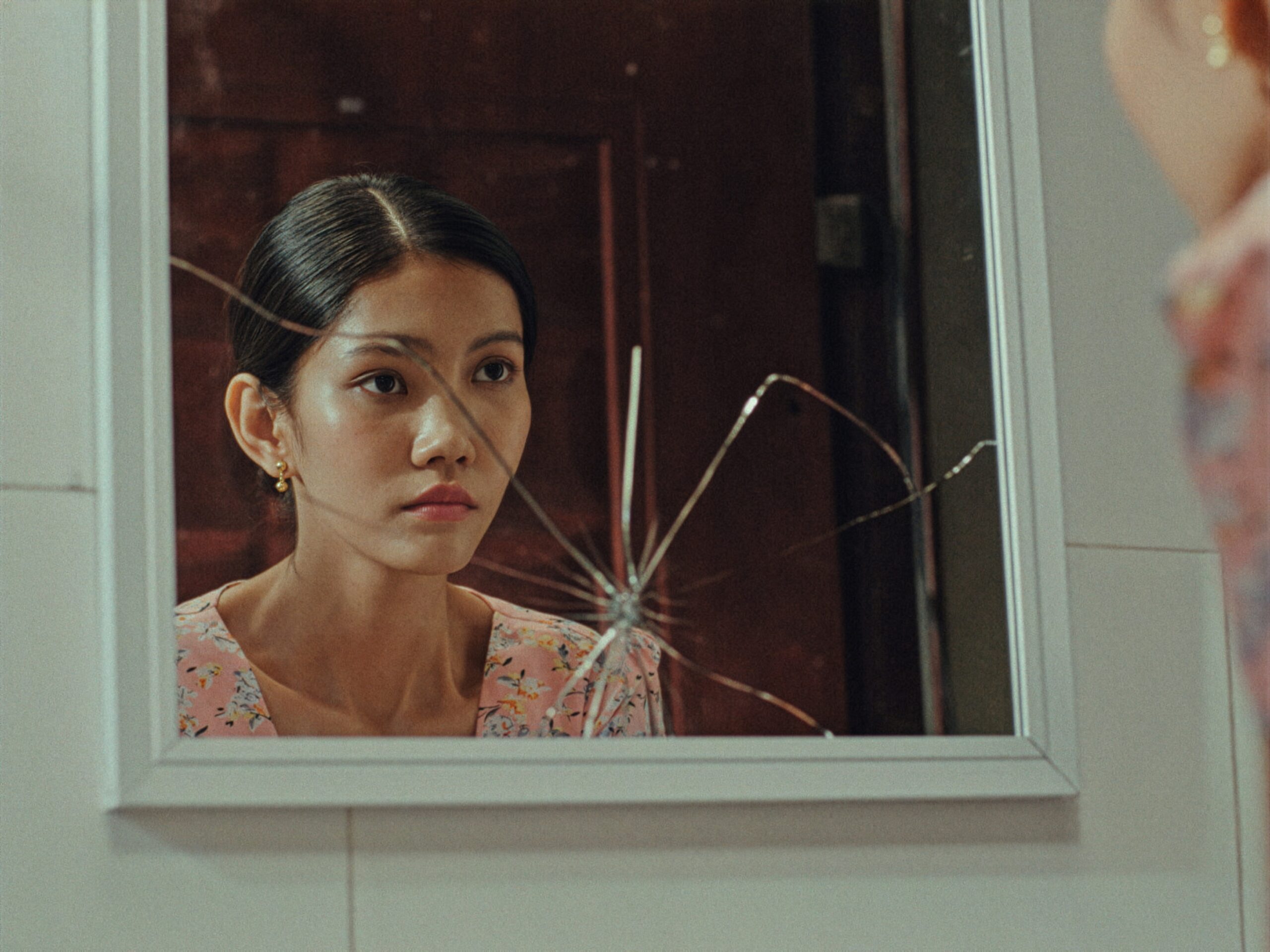
In Myanmar, it is difficult to portray same-sex love freely in film. Strict censorship and social taboos limit its expression. Yet San Kyi and Theint cautiously hold hands as they walk through the streets and take a trip together to the outskirts of Yangon. Standing by a river, they pose affectionately for photographs. Here, the film focuses on their wavering reflections on the water rather than showing them from the front or looking at their faces. Two figures stand close together on the muddy brown surface of the river. It is a brief scene, with no conspicuous visual flourishes. Yet it is the moment I remember most clearly from Fruit Gathering. It gives poetic form to an intimacy that cannot easily be shown.
This gentle approach to portraying their love continues inside their cramped boarding room. The camera captures the two women in close-up as they gently lick each other’s ears on the bed. This scene, too, is brief and ends quietly. In the very next shot, they lie on the bed with their clothes and makeup still neat. It almost makes us wonder whether they have really made love. Yet this restrained direction conveys an intimate moment shared cautiously and in secret.
Looking only at San Kyi’s thin body and Theint’s financial difficulties, we might mistake them for passive figures weighed down by their circumstances. Yet they express their love and desires as much as their situations allow. San Kyi’s emotional outbursts can also be read as resistance to her mother’s insistence that she marry a man, as well as to the pressures she faces at the factory over wages and working conditions. Theint’s decision to remain with her boyfriend while also being involved with San Kyi likewise reflects her determination to somehow find a way through her circumstances. The scene in which Theint suddenly stabs San Kyi with a knife at the factory seems to show her desperation to escape that reality erupting into violence. The two women’s hearts do not always move in the same direction. Their longing for love and their desire to survive draw them toward each other, yet also pull them apart.
The two women are like mango trees reaching their roots deep into dry ground, trying to bear fruit. Theint gives birth to a child, and San Kyi sees her with the child on a bus. In that moment, San Kyi seems to accept her, moving beyond the wounds that remain between them through the memory of their past love. In that gesture, I see the possibility of forgiveness.
Watching this film, I thought of another phrase. “Even during war, people make films.” FRUIT GATHERING was made while the civil war continued, democracy had collapsed, and same-sex love could not be freely expressed. Korea, too, has seen its National Security Act applied to the screening of films about historical events and state violence. That history makes this film feel especially meaningful to me. The courage to complete a film under a power that seeks to restrict expression and imagination meets San Kyi and Theint’s courage to keep holding on to love and life. Together, they bear fruit.
전쟁통에도 사랑을 하고, 영화를 만든다
한국에서 종종 하는 말이 있다. “전쟁통에도 사람들은 사랑했고 아이를 낳았다.” 세상살이가 힘들어도 인간은 사랑하고 아이를 낳는다는 말이다. 연애가, 사랑이 어렵다고 하는 사람에게 하는 농담과 진담 섞인 말이다. 다른 나라에도 비슷한 표현이 있겠지만, 전쟁을 경험한 세대가 살아 있고 ‘휴전’ 상태인 한국에서는 이 말은 사뭇 진지하게 들린다.
내전이 이어지는 미얀마를 배경으로 한 아웅 표(Aung Phyoe) 감독의 <FRUIT GATHERING>(2026)에서도 사람들은 각자의 방식으로 사랑한다. 양곤의 봉제공장에서 일하는 산 치(San Kyi, Nandar Myat Aung)는 고향으로 돌아가고 싶어 하지만, 내전 때문에 갈 수 없다. 젊은이들에게는 해외로 떠나는 일조차 여러 제약에 가로막혀 있다. 동료 테인 테인 우(Theint Theint Oo, Nandar Myint Lwin 이하 테인) 역시 여권을 얻기 위해 고군분투한다. 상황이 녹록지 않은데도 산 치와 테인은 각자의 방식으로 사랑과 친밀함을 찾아간다. 그리고 그 삶 속에서 아이도 태어난다.
미얀마에서는 동성 간의 사랑을 영화 속에서 자유롭게 드러내기 어렵다. 엄격한 검열과 사회적 금기가 그 표현을 제약한다. 그럼에도 영화 속 산 치와 테인은 거리를 걸으며 조심스레 손을 잡고, 양곤 외곽으로 함께 나들이를 간다. 강가에 선 두 사람은 다정하게 사진을 찍는다. 이때 영화는 두 사람의 정면이나 얼굴보다 수면 위에 어른거리는 형상에 집중한다. 황토색 강물 위에 다정하게 나란히 선 두 사람. 잠깐 스쳐 지나가고 별다른 기교를 드러내지 않는 장면이지만, <FRUIT GATHERING>에서 가장 기억에 남는 순간이다. 쉽게 드러낼 수 없는 두 사람의 친밀함을 시적으로 표현하기 때문이다.
두 사람의 사랑을 조심스럽게 표현하는 방식은 좁은 하숙집 안에서도 이어진다. 카메라는 침대 위에서 서로의 귀를 조심스레 핥는 두 사람을 클로즈업으로 포착한다. 이 장면 역시 길지 않고 담담하게 마무리된다. 바로 다음 쇼트에서 침대에 누워 있는 두 사람의 옷매무새와 화장은 단정하다. 그들이 정말 사랑을 나눈 것일까, 의심이 들 정도다. 하지만 이 절제된 연출이 조심스럽고 비밀스럽게 이루어진 두 사람의 친밀한 순간을 잘 드러낸다.
산 치의 마른 몸과 테인의 경제적 어려움만 보면, 두 사람을 자신의 처지에 눌린 소극적인 인물로 오해할 수 있다. 그러나 이들은 자신이 처한 상황 속에서 가능한 만큼 사랑과 욕망을 표현한다. 산 치가 격하게 감정을 터뜨리는 모습은 남성과의 결혼을 요구하는 어머니의 억압, 그리고 임금과 노동조건을 둘러싼 공장의 압박에 대한 저항으로도 읽힌다. 산 치와 관계를 맺으면서도 남자친구와의 관계를 이어가는 테인의 선택 역시, 자신이 처한 현실을 어떻게든 헤쳐 나가려는 의지와 맞닿아 있다. 공장에서 테인이 돌연 산 치를 칼로 찌르는 장면은 그 현실에서 벗어나려는 절박함이 폭력으로 터져 나온 순간처럼 보인다. 두 사람의 마음이 언제나 같은 방향을 향하는 것은 아니다. 사랑을 바라는 마음과 살아남으려는 욕망은 서로를 향하면서도 어긋난다.
두 사람의 모습은 메마른 땅에 깊이 뿌리를 내리고 열매를 맺으려는 망고나무 같다. 테인은 아이를 낳고, 산 치는 버스 안에서 아이와 함께 있는 그녀를 발견한다. 그 순간 산 치는 지난 사랑의 기억 속에서 두 사람 사이에 남은 상처를 넘어 그녀를 받아들이는 듯하다. 나는 그 모습에서 용서의 가능성을 본다.
이 영화를 보며 떠올린 말은 “전쟁통에서도 영화를 만든다”였다. 내전이 끝나지 않고, 민주주의가 무너지고, 동성 간의 사랑을 자유롭게 표현하기 어려운 상황에서도 <FRUIT GATHERING>은 만들어졌다. 한국에도 역사적 사건과 국가폭력을 다룬 영화의 상영에 국가보안법이 적용된 경험이 있어 더 특별하게 다가오는 영화다. 표현과 상상력을 제한하려는 권력의 통제 속에서도 영화를 완성하려는 용기가, 사랑과 삶을 포기하지 않으려는 산 치와 테인의 용기와 만나 열매를 맺었다.
The HIFF ONLINE CREATIVES & CRITICS IMMERSIVE (HOCCI) program supports sustainable film criticism in Hawai’i through mentorship and paid career opportunities for Hawai’i-based AANHPI critics. The mission of HOCCI is to broaden diversity in film criticism across the Pacific and use influencer branding strategies to spark career opportunities. The 2026 HOCCI is supported by Critical Minded, a grant-making and learning initiative that supports cultural critics of color in the United States.
 Junseok Eom began his career in South Korea as a film critic, festival programmer, and video producer. He served as a jury member at the Busan International Short Film Festival and as Program Director for the Busan International Kids and Youth Film Festival. Eom wrote film criticism for Cultura and has contributed film-related articles to Kyungsang Ilbo since 2026. After moving to the U.S., he produced digital content for NRDC, an environmental advocacy organization. He currently works at KBFD-TV in Hawai‘i as a news video editor and commercial/documentary producer, while expanding his work in U.S. film criticism and festivals.